What loudness in LUFS means
LUFS (Loudness Units relative to Full Scale) measures how loud a song sounds across its whole length, not just its highest peak. Alongside it there is true peak, measured in dBTP: the actual peak after conversion to analogue or to a compressed format. A master can peak below 0 dBFS and still distort after encoding if its true peak is too high.
For streaming it is sensible to keep true peak around -1 dBTP. Very loud masters benefit from a little more margin, because AAC and Ogg encoding can push peaks upwards.
Normalisation on streaming services
The major platforms play every track back at roughly the same level by default. A master that is much louder than that level is simply turned down, and all it loses is dynamics.
| Platform | Target level |
|---|---|
| Spotify | about -14 LUFS |
| YouTube | about -14 LUFS |
| Apple Music | about -16 LUFS |
| Tidal and Amazon Music | about -14 LUFS |
These values can change and listeners can switch normalisation off. Treat them as guidelines, not hard requirements.
So how loud should your master be?
There is no magic number. An acoustic singer-songwriter track often sounds open and natural around -14 LUFS; a densely produced rock or dance track usually sits higher because the genre calls for it. Marieke Jansen, our mastering engineer, sets the level for the song and always compares at matched volume so loudness does not sway the judgement.
More important than the exact figure is consistency: songs on an EP or album should sit naturally next to each other.
Files for digital distribution
Distributors that deliver your music to streaming services usually ask for WAV at 16-bit/44.1 kHz or higher. Deliver a 24-bit master if your distributor accepts it; Apple Music uses high-resolution files for its lossless catalogue.
- WAV, 24-bit, at the sample rate of the mix
- Silence at start and end trimmed cleanly
- File names with track number and title
- ISRC codes per song, via your distributor or label
A master for CD
A CD is always 16-bit/44.1 kHz. For the pressing plant we deliver a DDP image: a set of files containing the audio, the gaps between songs, ISRC codes and optionally CD-Text. That way the running order ends up on the disc exactly as intended. A standard CD holds roughly 74 to 80 minutes.
Check with your pressing plant which delivery format they want before mastering starts.
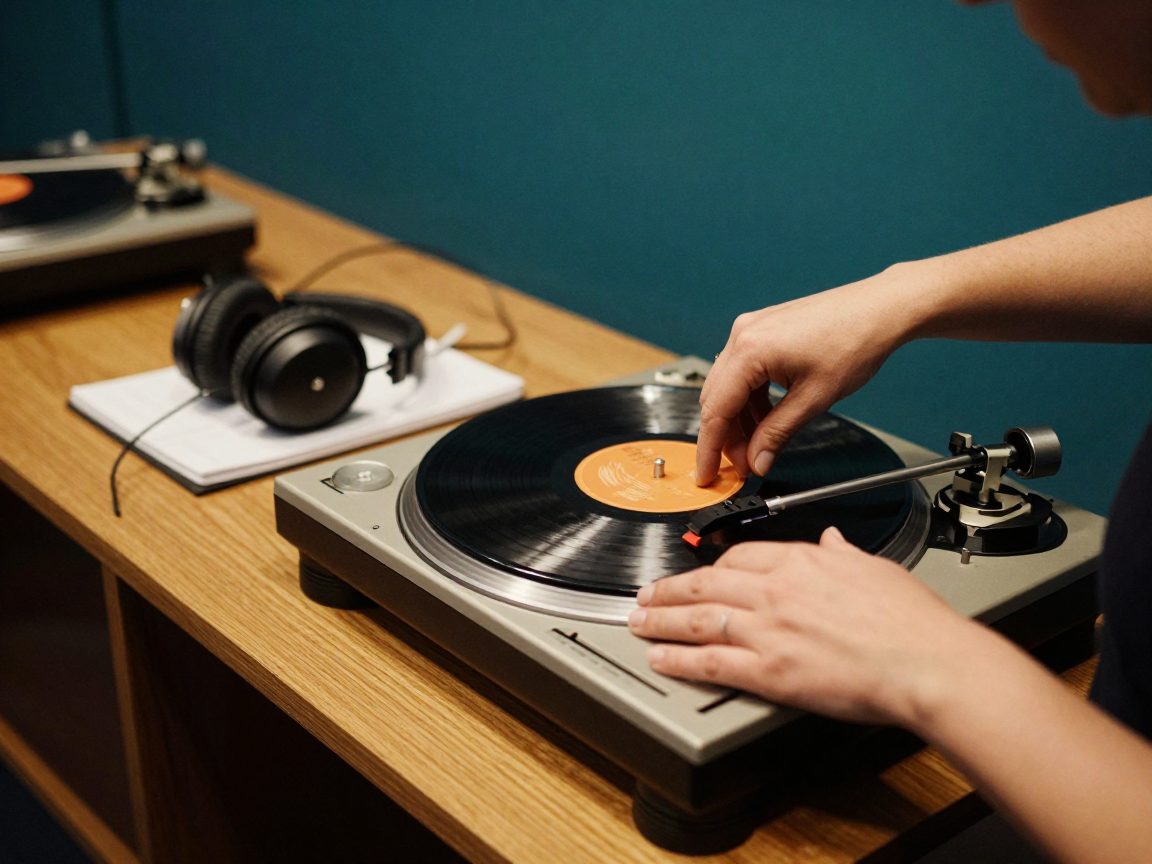
A master for vinyl
Vinyl has physical limits. The longer a side, the narrower the grooves and the quieter and less bass-heavy the cut has to be. For a 12-inch at 33 rpm, around 18 to 22 minutes per side is a practical upper limit. Harsh sibilance and wide stereo information in the low end can cause trouble at the cutting lathe.
A vinyl master is therefore made less loud than the streaming version and takes the running order into account: inner grooves sound less bright, so quieter songs often close a side.
What we deliver per format
At Comptelogicza we make a separate master for each medium rather than one compromise. A single song costs €65, an EP of up to four songs €220 and an album of up to twelve songs €480. The Mastering page lists what each package includes.
If your mix comes from elsewhere, send it without a limiter on the master bus and with headroom; our guide on delivering tracks for mixing covers the same principles for export settings.
Before you approve the master
- Listen on your own speakers, headphones and phone
- Compare at matched volume with your references
- Check transitions and gaps on an EP or album
- Verify titles, running order and ISRC codes
Questions about the right format for your release? Get in touch via contact or call 020 754 3816. For delivery and payment arrangements, see the terms and conditions.