Voice-over and speech recording
A quiet 6 m² booth, an engineer who follows the script and the pronunciation, and remote direction for clients outside Amsterdam: spoken audio that sounds clear, even and ready to publish.
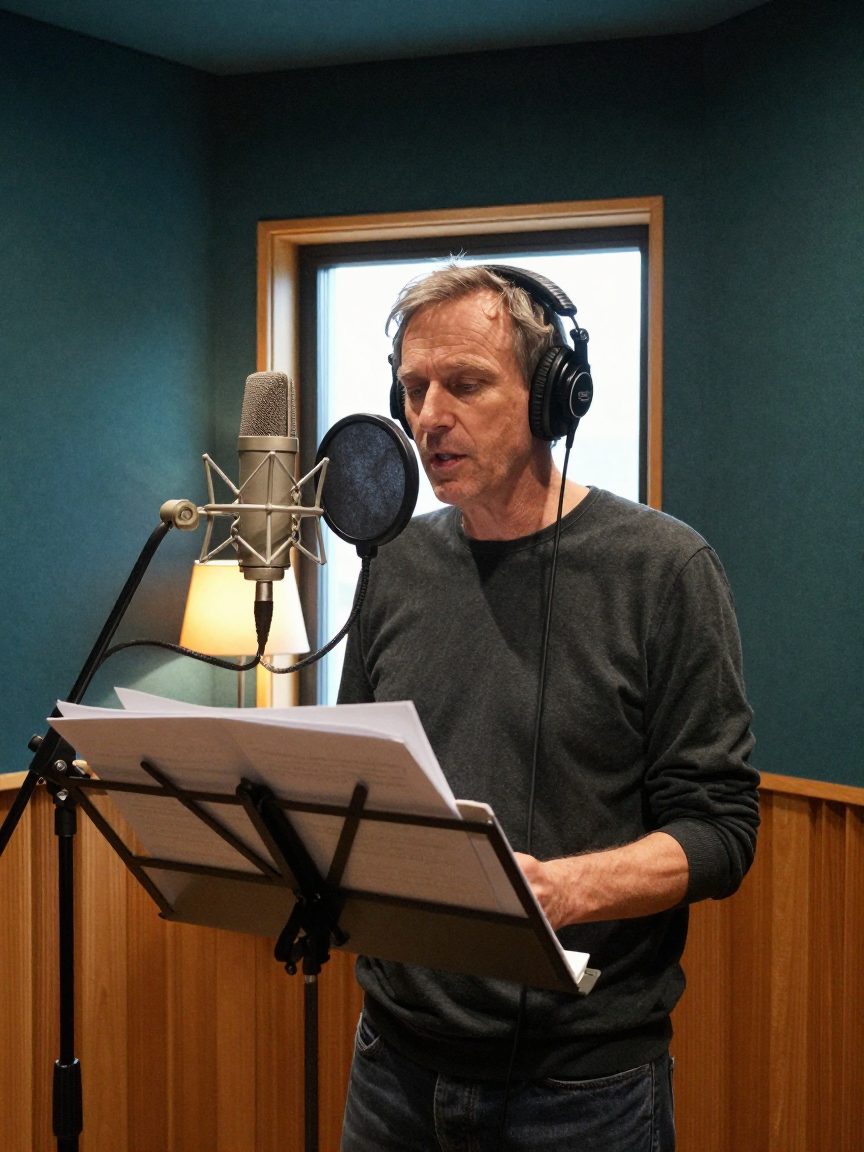
People listen to speech differently from music. A strong script still loses its audience when there is room echo, background hum or a voice that drifts closer and further from the microphone. Our booth is designed for dry, consistent speech: no street noise, no reflections off bare walls, and a fixed microphone position that stays the same from the first line to the last.
At Comptelogicza we record radio spots, online ads, e-learning modules, corporate films, podcasts, audiobooks and phone menus. You can voice the script yourself, bring a voice actor, or have your agency or client follow the session remotely and give direction as it happens. The engineer tracks the script, marks the chosen takes and delivers files that your editing software or platform accepts without conversion.
How it works
Script and brief
Send the final script, the tone you are after, the maximum length and where it will be published. For tricky names or jargon, add a pronunciation guide.
Voice check
We set the microphone for the voice, test a few lines for distance, plosives and sibilance, and agree on pacing with whoever is directing.
Directed recording
Line by line or paragraph by paragraph, with alternative reads where the director asks for them. The engineer marks the chosen take for each line in the script.
Edit and delivery
Breaths and mouth clicks removed, pauses evened out, files named per chapter or per spot, and delivered by download link.
01What the booth is used for
Every client asks for something slightly different, but the starting point is always a clean, intelligible voice. Common projects include:
- Ads for radio, online video and social media, where every second counts
- E-learning and how-to videos, where consistency across dozens of modules matters
- Podcasts with one or two hosts, as a one-off episode or a regular series
- Audiobooks and long-form texts, recorded across several sessions
- Phone menus and on-hold messages for businesses
Speakers need to be at least 16 years old. For younger voices, we agree on the arrangements with parents or the agency in advance.
02Inside the booth
The 6 m² booth is separate from the live room and has a window onto the control room, so speaker and engineer can see each other. It is deliberately small and dry: a voice should sound close and natural, not as if it were recorded in a hallway.
From our 22 microphones we pick the one that suits the voice. A bright, higher voice sometimes calls for a different model than a low, warm one. There is a script stand, a tablet holder, water and adjustable lighting. Sitting or standing are both fine; standing often gives ads more energy.
03Remote direction
You do not need to be in Amsterdam to direct a session. An agency, a client or an author can listen live over an online connection and give notes between takes. The speaker hears the director in their headphones, while the engineer manages both the call and the recording.
Agree beforehand who has the final say on a take. With three remote listeners who each want something different, time disappears quickly. We send the connection details in advance and run a short line test at the start of the session.
04What to prepare
A voice session depends on its script. The more complete the text, the less booth time goes into discussion.
- The final script as a document with numbered lines or sentences
- Pronunciation of names, brands and technical terms, ideally as an audio clip
- The target length per spot, for example 20, 30 or 60 seconds
- A sense of the tone: businesslike, warm, upbeat or narrative
- For video: a cut of the film to time the read against
In English, a 60-second script usually runs to about 140 to 170 words, depending on pace. For more on planning and costs, read our guide to the voice-over recording budget.
05Hourly rate or per-spot price
There are two ways to pay for voice work. Which one works out cheaper depends on the length and the number of versions.
| Rate | Best for | Covers |
|---|---|---|
| €195 per spot | A single ad up to 60 seconds | Recording and editing of the spot |
| €75 per hour | E-learning, podcasts, audiobooks, several spots or versions | Booth and engineer for the session |
Hourly bookings have a minimum of 2 hours. If you have five short spots in several variants, an hourly booking is often better value than five separate spot prices. Not sure? Send us the script and we will work it out with you.
06Files and formats
Our standard delivery is 24-bit, 48 kHz WAV, the usual format for video and broadcast. For podcasts and web use we can add MP3 versions on request. Long texts are split by chapter or module, with file names that match your script.
- Edited, clean files with breaths and clicks removed
- Raw takes on request, so you can choose alternatives yourself
- For ads, a version cut to the agreed length
We keep the session for 6 months, so that a later pick-up line sounds the same as the original. After that, everything is deleted.
07Revisions and what the price leaves out
Each spot includes 2 revision rounds on the edit, such as swapping a take or tightening a pause. If the wording itself changes after the session, it needs a new recording, which we charge at the hourly rate.
Not included: fees for an external voice actor, any usage rights you agree with that speaker, music under the spot, and mixing the voice with a soundtrack. To have voice and music mixed together, see mixing. If your project is music rather than speech, music recording is the right place to start.
08Payment, cancellation and terms
All prices include 21% VAT: €75 per hour and €195 per spot. Business invoices show €61.98 and €161.16 net of VAT, payable within 14 days. A 30% deposit secures your booking.
You can cancel or reschedule free of charge up to 3 days before the session. The full rules are in our terms and conditions. If we process personal data on behalf of your organisation, for instance employee names in an e-learning course, we sign a data processing agreement.
What's included
- Quiet 6 m² vocal booth
- Engineer who follows the script and logs takes
- Microphone chosen to suit the voice
- Remote direction over an online connection
- Edit with breaths and mouth clicks removed
- 24-bit / 48 kHz WAV, MP3 on request
- Session kept for 6 months
Frequently asked questions
Do you provide voice actors?
We provide the booth, the engineer and the edit. You bring the speaker yourself or book one through your agency. Using your own voice is of course fine too.
How long does an e-learning module take to record?
It depends on the length of the text and the amount of jargon. Allow several booth hours for every finished hour of audio. Send us the script and we will estimate it.
Can our client listen in without coming to the studio?
Yes, through remote direction. The client hears the recording live and can give notes. We test the connection at the start of the session.
Can we record a two-person podcast?
Yes. Get in touch through the contact form or [email protected] and we will talk through the setup and session length.
When do we receive the files?
Short spots are usually delivered on the day of the session. For long texts with editing we agree a delivery date; we answer enquiries within 2 working days.
Other services
- 01
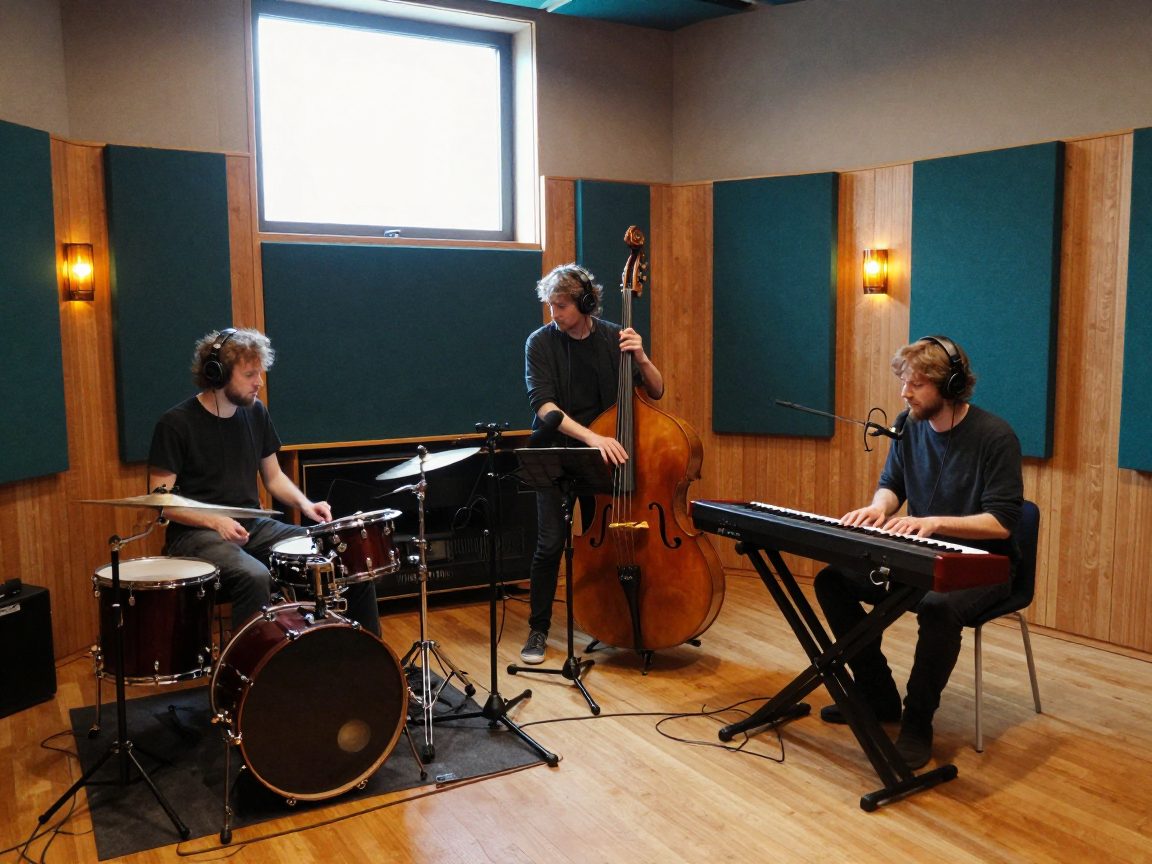 Music recordingRecording for bands, solo artists and ensembles of up to six players in our live room, engineer included.€85per hour, engineer included
 - 02
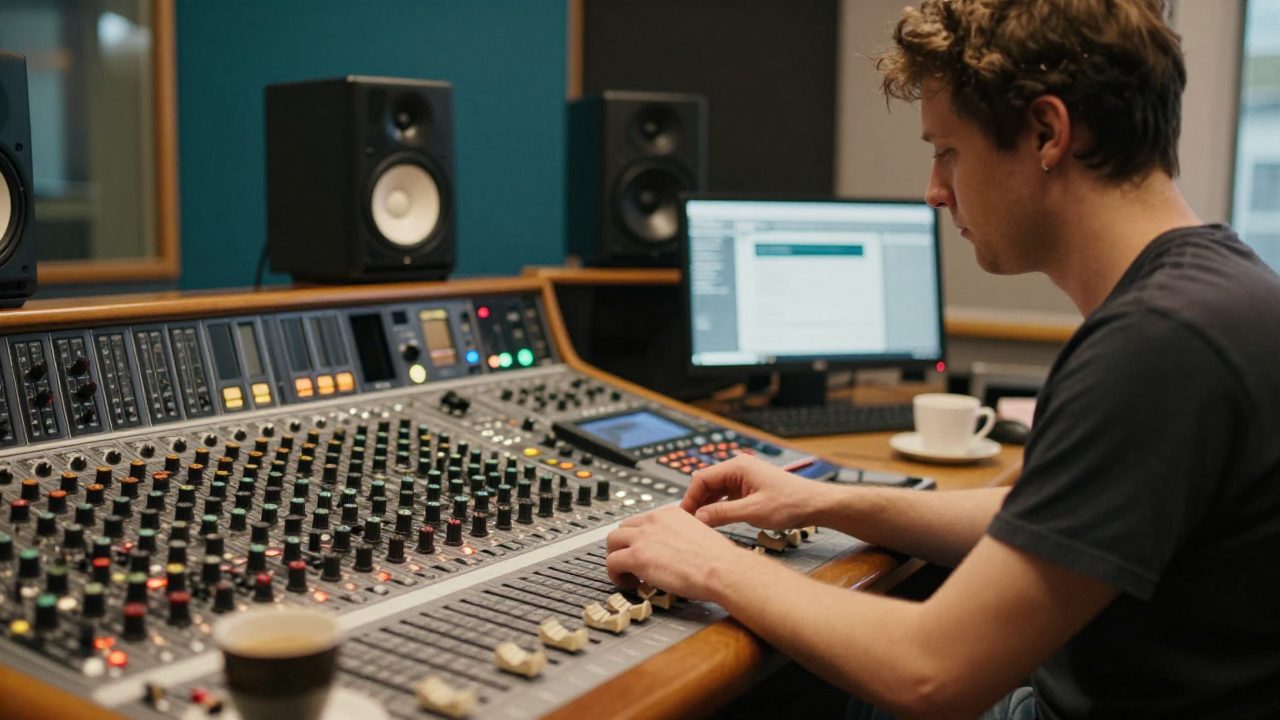 MixingMixing of your own or studio-recorded tracks, with two revision rounds per song.€240per song, up to 48 tracks
 - 03
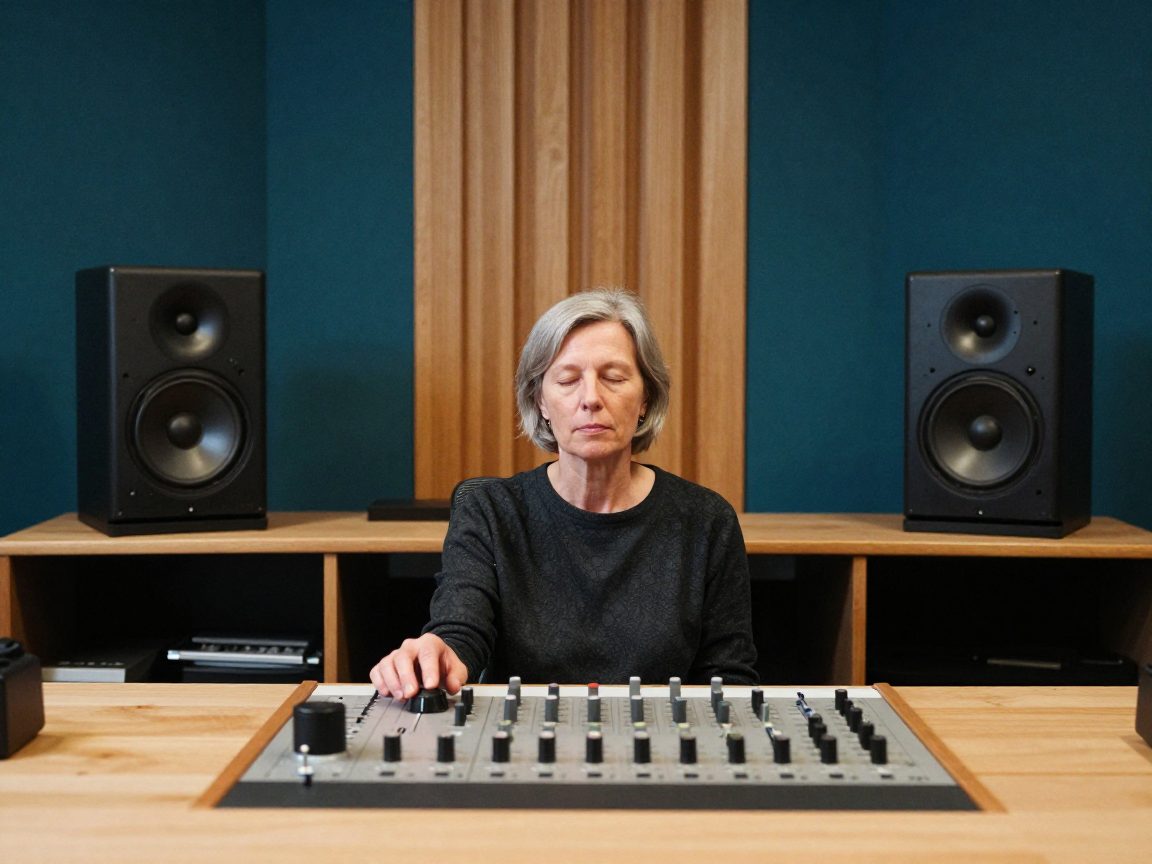 MasteringMastering for streaming, vinyl and CD, with a master per format and loudness matched to each platform.€65per song
Recording in Amsterdam soon?
Tell us what you want to capture
Send a short outline of your project and a few possible dates. Within 2 working days you get a proposal and quote, with no obligation.