Audio mastering
The final step before release: a fresh listen in a dedicated mastering room, with masters prepared for each format and set right for each platform.
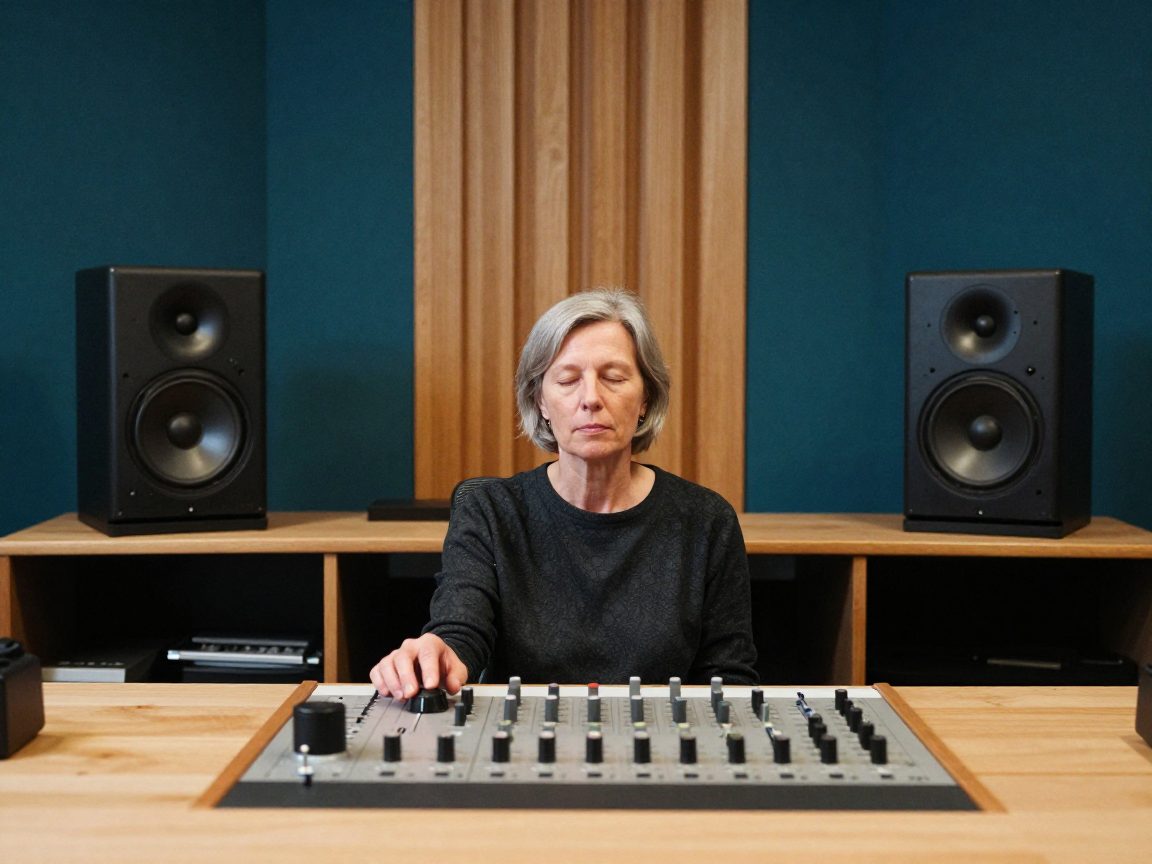
Mastering does not change the character of your mix; it makes sure the mix translates everywhere. A master should be just as convincing on a phone speaker as on a hi-fi, and an album should feel like one piece from the first song to the last. That takes different ears from the person who made the mix, and a room where you can hear honestly what happens in the low end and in the dynamics.
Marieke Jansen is the mastering engineer at Comptelogicza. She works on mixes made here and on mixes from anywhere else. The starting point never changes: we ask where your release is going, whether streaming, vinyl, CD or a mix of those, and deliver a master for each format that suits it.
How it works
Send mixes and details
Send your stereo mixes as WAV files with headroom, along with the running order, the formats you need and any ISRC codes.
Reference master
We master one representative song first, so you can judge the direction before the whole release is finished.
Finish the release
Every song gets the same tonal direction, with consistent loudness between tracks, gaps and fades.
Masters per format
You receive separate files for streaming and, if requested, for vinyl and CD, with a short note on each format.
01When mastering makes sense
Mastering is worth it as soon as your music goes public: a single on streaming services, an EP for the merch table, an album on vinyl or a song heading to radio or a playlist curator. It also helps if you mixed it yourself, because after weeks on a song you get used to its quirks. A mastering engineer hears them with fresh ears.
Mastering cannot fix a mix. If the vocal is too quiet or the kick disappears into the bass, a master can only do so much. When we hear problems like that, we tell you plainly and suggest adjusting the mix first, for example through our music mixing service.
02What to send
- Stereo mixes as WAV or AIFF at the original sample rate, 24-bit or higher;
- no limiter or loudness plug-in on the master bus, with peaks well below 0 dBFS;
- a little silence at the start and end, so we can set the fades ourselves;
- the running order, and whether transitions should be tight, spaced or seamless;
- which formats you need a master for;
- the ISRC code for each song and, for a CD, the titles and artist names exactly as they should appear.
If you have a reference, such as an earlier release of yours or a record by another artist, include it. It gives us a concrete sense of the loudness and tone you have in mind.
03Loudness for each platform
Streaming services play music back at their own normalised level. A master pushed to extreme loudness is simply turned down there, while the dynamics it gave up are gone for good. That is why we look less at how loud a master is and more at how it sounds once a platform has adjusted the volume.
We set the loudness according to where your music will mostly be heard and to your genre: an acoustic singer-songwriter album needs something different from a club track. Our guide on master formats and loudness explains integrated loudness, true peak and why louder is not automatically better.
04Formats and what you receive
| Format | File | What we watch |
|---|---|---|
| Streaming and downloads | WAV, 24-bit, per song | Loudness and true peak set for normalisation |
| CD | DDP image with track list | 16-bit, 44.1 kHz, gaps and CD-Text |
| Vinyl | WAV per side, high resolution | Mono low end, controlled sibilance, running time per side |
For vinyl we take the running time of each side into account: the longer a side, the lower the level it can carry. So talk the running order through with us early. Once your test pressing arrives, you can have it played back here and we will go through what you hear together.
05Treating an EP or album as one record
With an EP or album we do not treat songs in isolation. Loudness between tracks has to feel natural: a quiet ballad can sit lower than the opener, but not so low that listeners reach for the volume. We also match the tonal balance, especially when songs were mixed in different studios or by different people.
We shape the transitions as well: the length of gaps, the decay of a final chord and any seamless segues between songs. The EP package covers up to 4 songs, the album package up to 12.
06Revisions and sign-off
Each release includes 2 revision rounds. You play the masters on your own systems and send one combined list of notes, such as track 3 slightly less bright or shorter gap before the closing song. If you send a new mix instead, we master it again at the per-song rate.
Approved masters reach you via a download link. We keep the files for 6 months and then delete them. Payment, cancellation and retention rules are set out in our terms and conditions.
07Rates and VAT
A single master costs €65 per song. An EP of up to 4 songs is €220, and an album of up to 12 songs is €480. All prices include 21% VAT; excluding VAT they come to €53.72, €181.82 and €396.69.
The price is per release and covers masters for the formats you list in your request. If your album runs past 12 songs, the extra songs are charged at the per-song rate. When you confirm, we ask for a 30% deposit. Business clients pay within 14 days of the invoice date.
08What mastering does not cover
- Changes inside the mix, such as the level of a single instrument; that requires the individual tracks.
- Applying for ISRC or EAN codes, or uploading to distributors.
- Artwork for sleeves, labels or CD-Text beyond titles and artist names.
- Ordering pressings or CDs from a plant.
Want to know whether your mixes are ready for mastering? Send one song through the contact form and you will hear from us within 2 working days.
What's included
- Reference master of one song before the full release is finished
- Loudness matched to the platform where your music appears
- Consistent tone and loudness across an EP or album
- Gaps, fades and transitions between songs
- Separate masters for streaming, CD and vinyl on request
- 2 revision rounds per release
- Masters kept for 6 months
Frequently asked questions
Does the mix have to be made at your studio?
No. We are just as happy to master mixes from home studios or other studios. Just leave enough headroom and keep the limiter off the master bus.
Can I attend the mastering session?
Yes, you can listen in on part of the session in the mastering room. Arrange it in advance and we will pick a moment when the reference master is ready.
Do I need a separate master for vinyl?
Yes. Vinyl has its own limits in the low end, sibilance and running time per side. Mention a vinyl release in your request and we will prepare a dedicated master.
How loud will my master be?
As loud as suits your genre and the platform, without sacrificing dynamics. Streaming services normalise playback volume, so extreme loudness gains you little there.
Other services
- 01
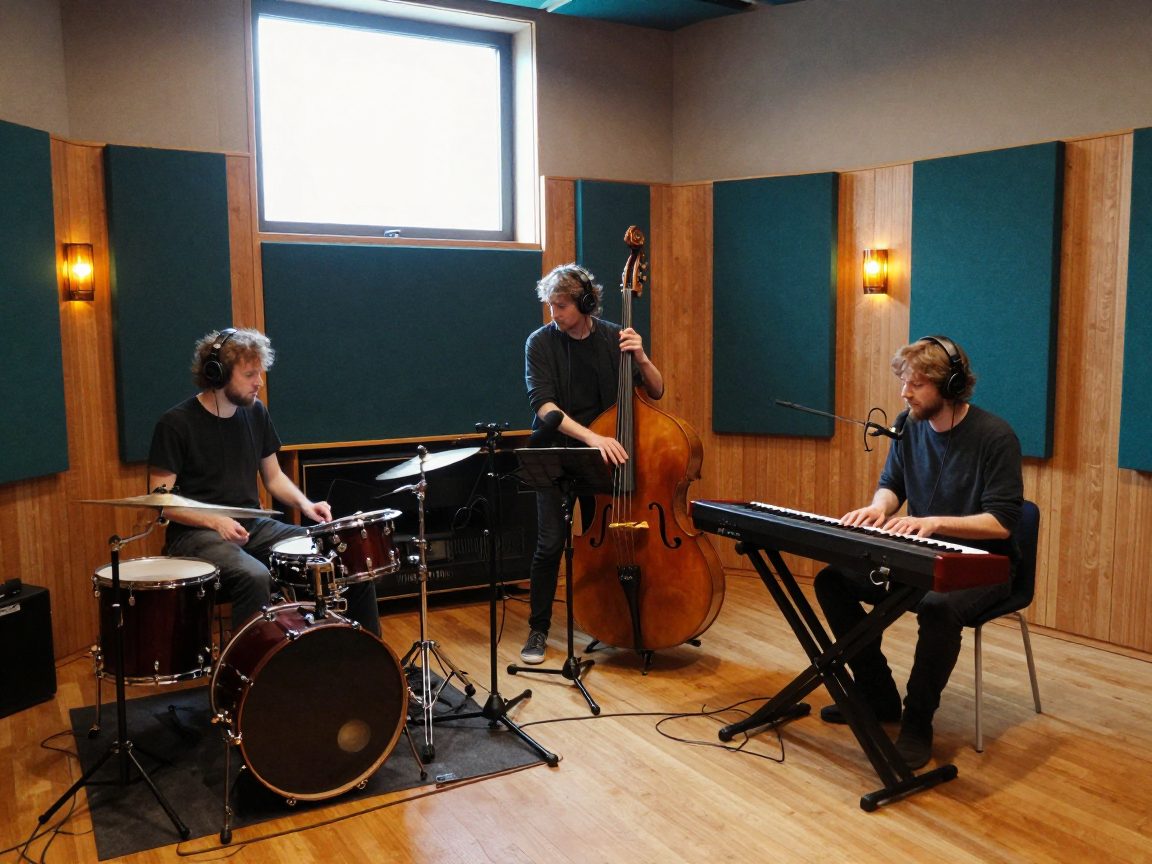 Music recordingRecording for bands, solo artists and ensembles of up to six players in our live room, engineer included.€85per hour, engineer included
 - 02
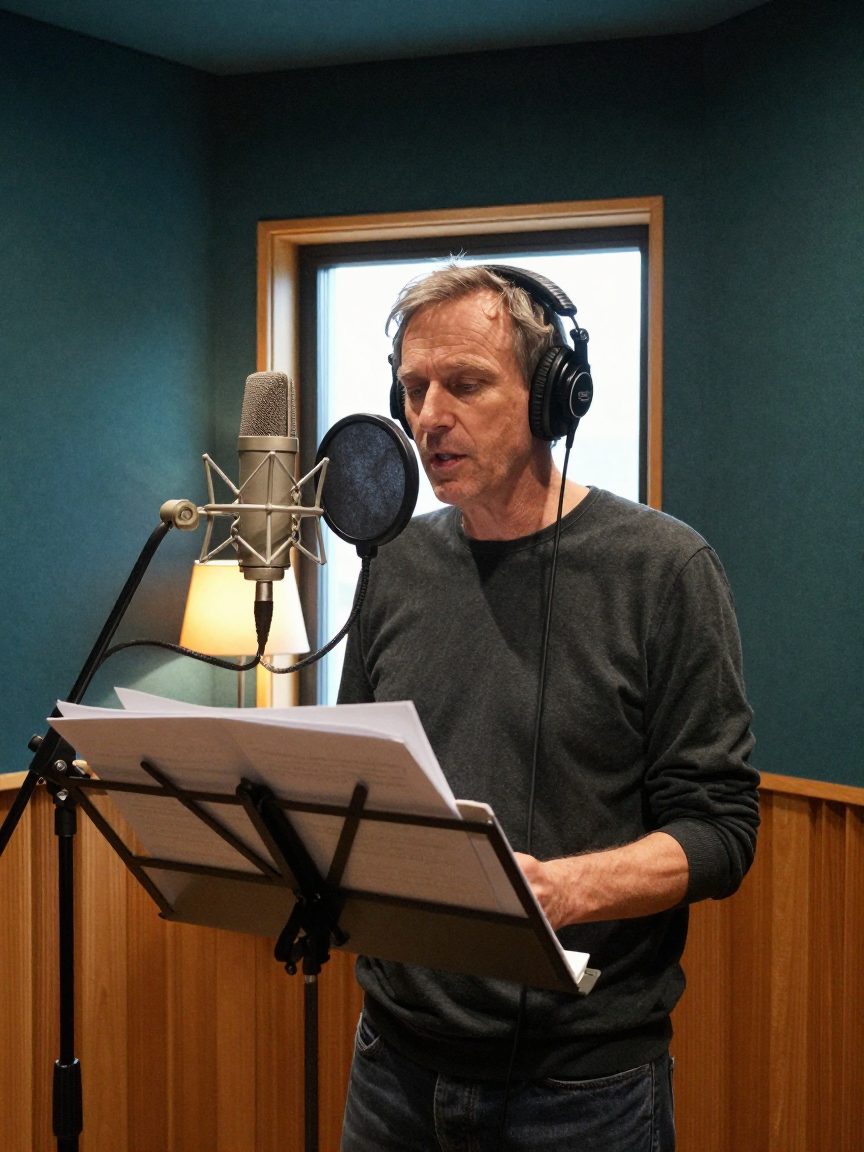 Voice-over and speechVoice recording for ads, e-learning, podcasts and audiobooks in the isolated booth, with remote direction available.€75per hour in the booth
 - 03
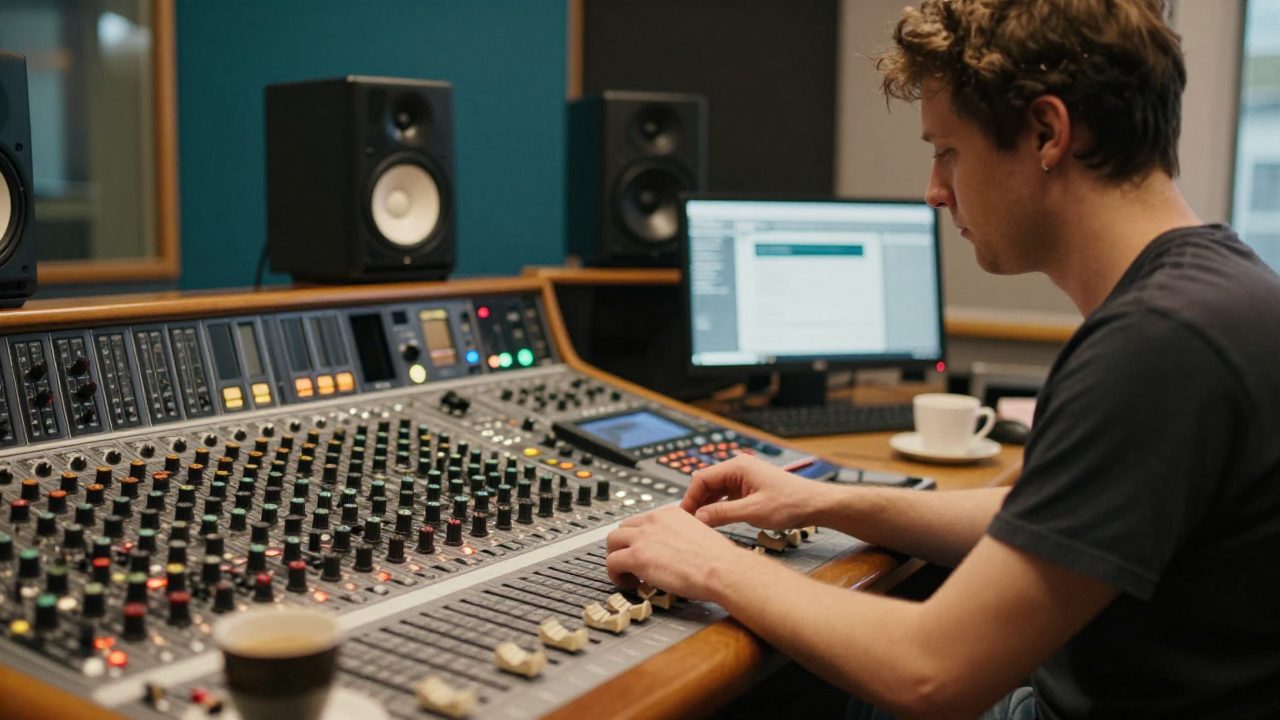 MixingMixing of your own or studio-recorded tracks, with two revision rounds per song.€240per song, up to 48 tracks
Recording in Amsterdam soon?
Tell us what you want to capture
Send a short outline of your project and a few possible dates. Within 2 working days you get a proposal and quote, with no obligation.